0%
Twilight. Art Project. 2014–2016
THE CITY.
People are selfish by nature. I am just as selfish as everyone else, perhaps even more so.
Ever since I was a child, I loved walking with no destination in mind, simply wandering wherever my feet would take me. That was when dreaming came easiest. There is something about the steady rhythm of walking that allows your thoughts to drift effortlessly into distant places, into beautiful impossibilities and imagined worlds. Most of the time I was so absorbed in myself that I barely noticed what surrounded me, and yet certain images, small slides of the outside world, left their mark on my memory. Even then I was acutely aware of beauty.
One day I was crossing a field. I must have been twelve or thirteen. It was in Estonia, where my grandparents spent their summers. The countryside rolled gently from open fields into forests and groves, dotted with lonely farmhouses, when suddenly I noticed a man standing in the middle of the field with an easel. Completely absorbed in his work, he moved a small brush across a sheet of watercolor paper. Quietly I came up behind him and looked over his shoulder.
Something happened that day. I can no longer remember exactly what I felt or thought, but suddenly I saw the world around me through his eyes. The groves, the fields, the landscape - it was unmistakably the same world, and yet it was not. It was another reality altogether, created by a human hand and somehow more captivating than the original. I watched him gather the scattered fragments of nature into a single harmonious whole with a few
People are selfish by nature. I am just as selfish as everyone else, perhaps even more so.
Ever since I was a child, I loved walking with no destination in mind, simply wandering wherever my feet would take me. That was when dreaming came easiest. There is something about the steady rhythm of walking that allows your thoughts to drift effortlessly into distant places, into beautiful impossibilities and imagined worlds. Most of the time I was so absorbed in myself that I barely noticed what surrounded me, and yet certain images, small slides of the outside world, left their mark on my memory. Even then I was acutely aware of beauty.
One day I was crossing a field. I must have been twelve or thirteen. It was in Estonia, where my grandparents spent their summers. The countryside rolled gently from open fields into forests and groves, dotted with lonely farmhouses, when suddenly I noticed a man standing in the middle of the field with an easel. Completely absorbed in his work, he moved a small brush across a sheet of watercolor paper. Quietly I came up behind him and looked over his shoulder.
Something happened that day. I can no longer remember exactly what I felt or thought, but suddenly I saw the world around me through his eyes. The groves, the fields, the landscape - it was unmistakably the same world, and yet it was not. It was another reality altogether, created by a human hand and somehow more captivating than the original. I watched him gather the scattered fragments of nature into a single harmonious whole with a few
confident strokes of his brush.
His name was Alexander Maslyanitsyn. From that day on I followed him everywhere like a faithful puppy. I already had paints and brushes at home and had tried drawing before, but somehow it had never felt right. Now I trailed after him, secretly watching every movement, trying to pour onto paper everything I saw around me. He never seemed to mind; he smiled and, from time to time, offered a few quiet words of advice.
What fascinated me most was that something limitless could suddenly fit within the boundaries of a single sheet of paper. The sheet had its own laws. Some things belonged inside it, others did not. Certain parts of a composition felt completely wrong, while others filled me with pure excitement. Without realizing it, I was learning composition and color. That autumn I was admitted directly into the fifth - or perhaps the sixth - year of art school.
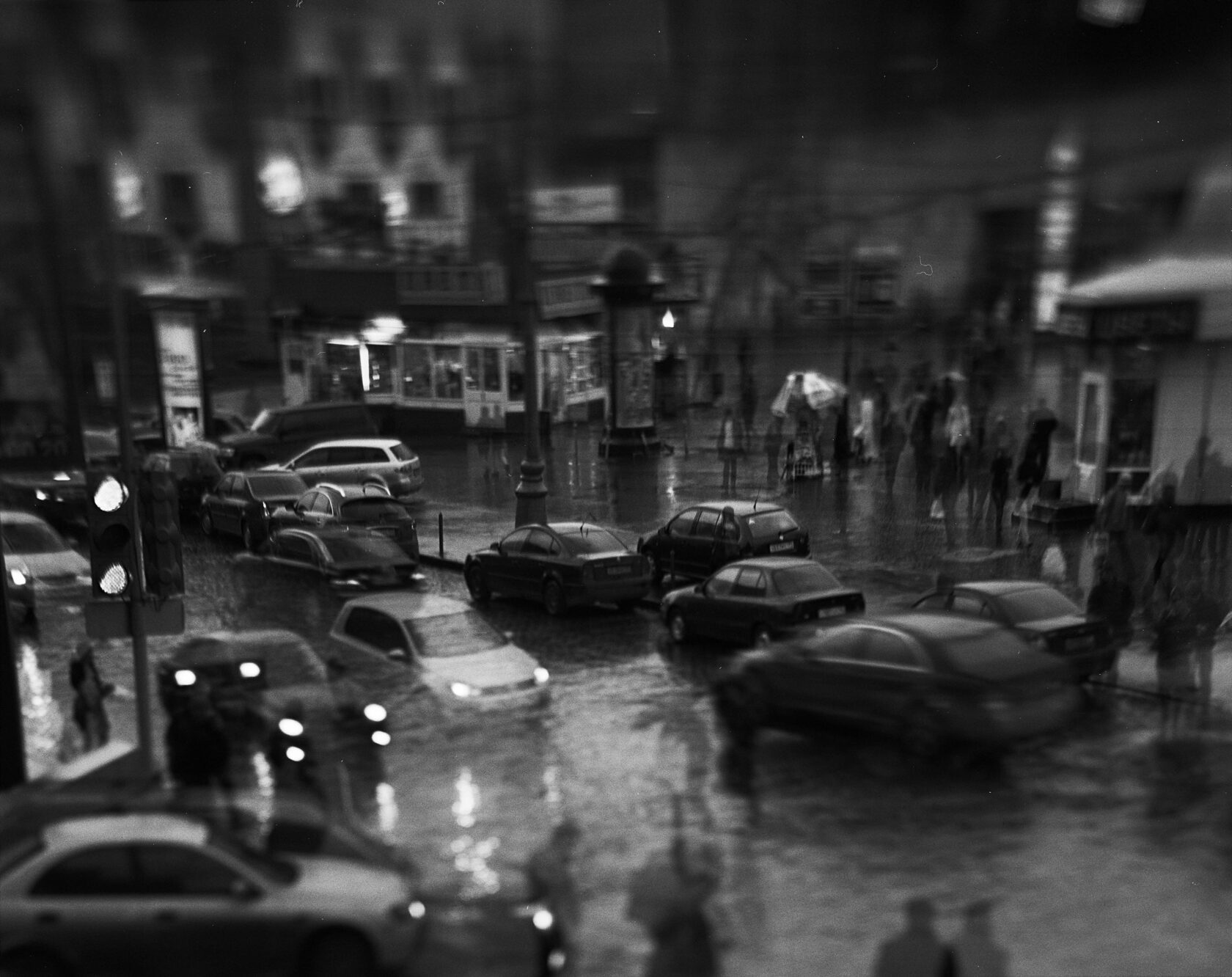
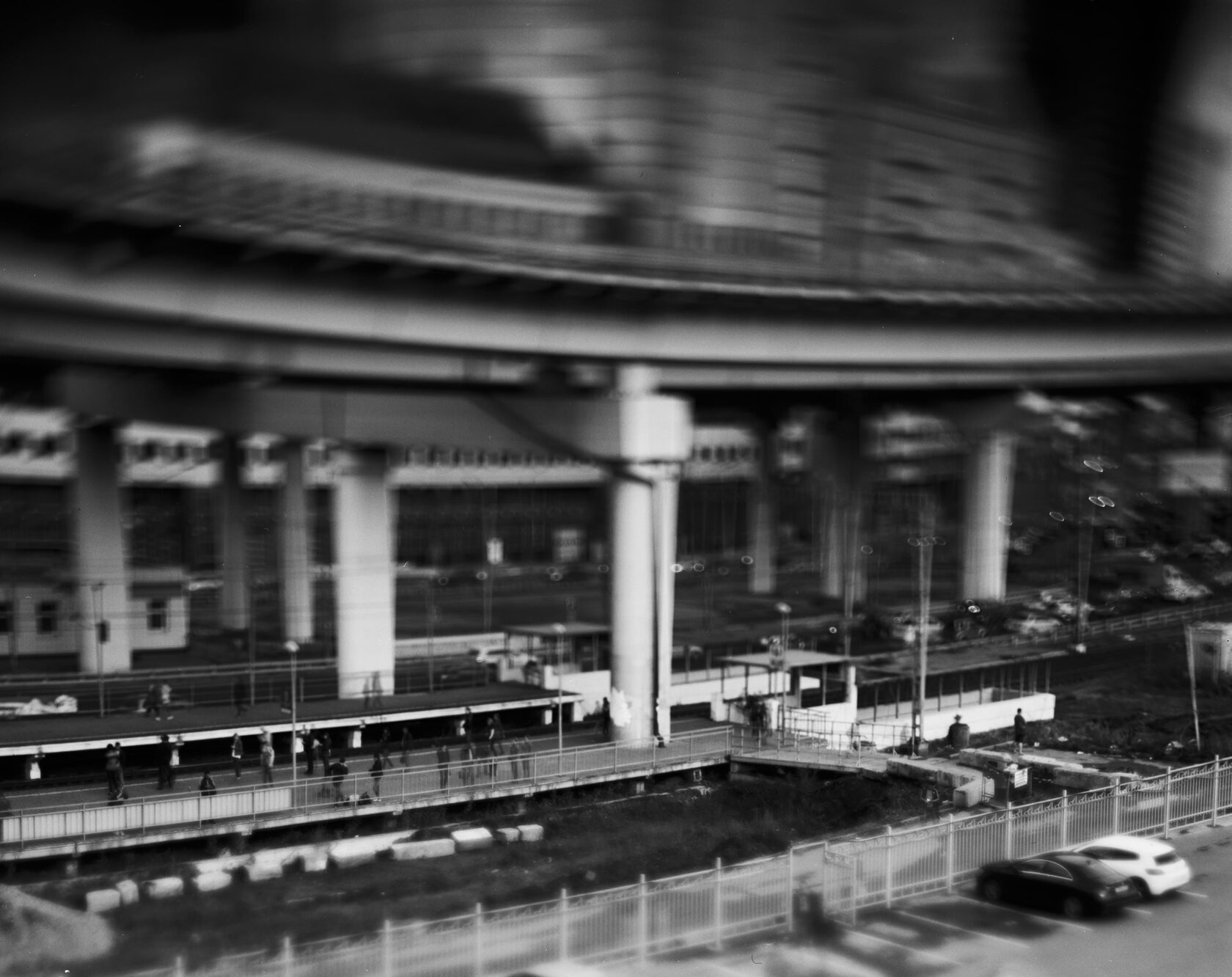
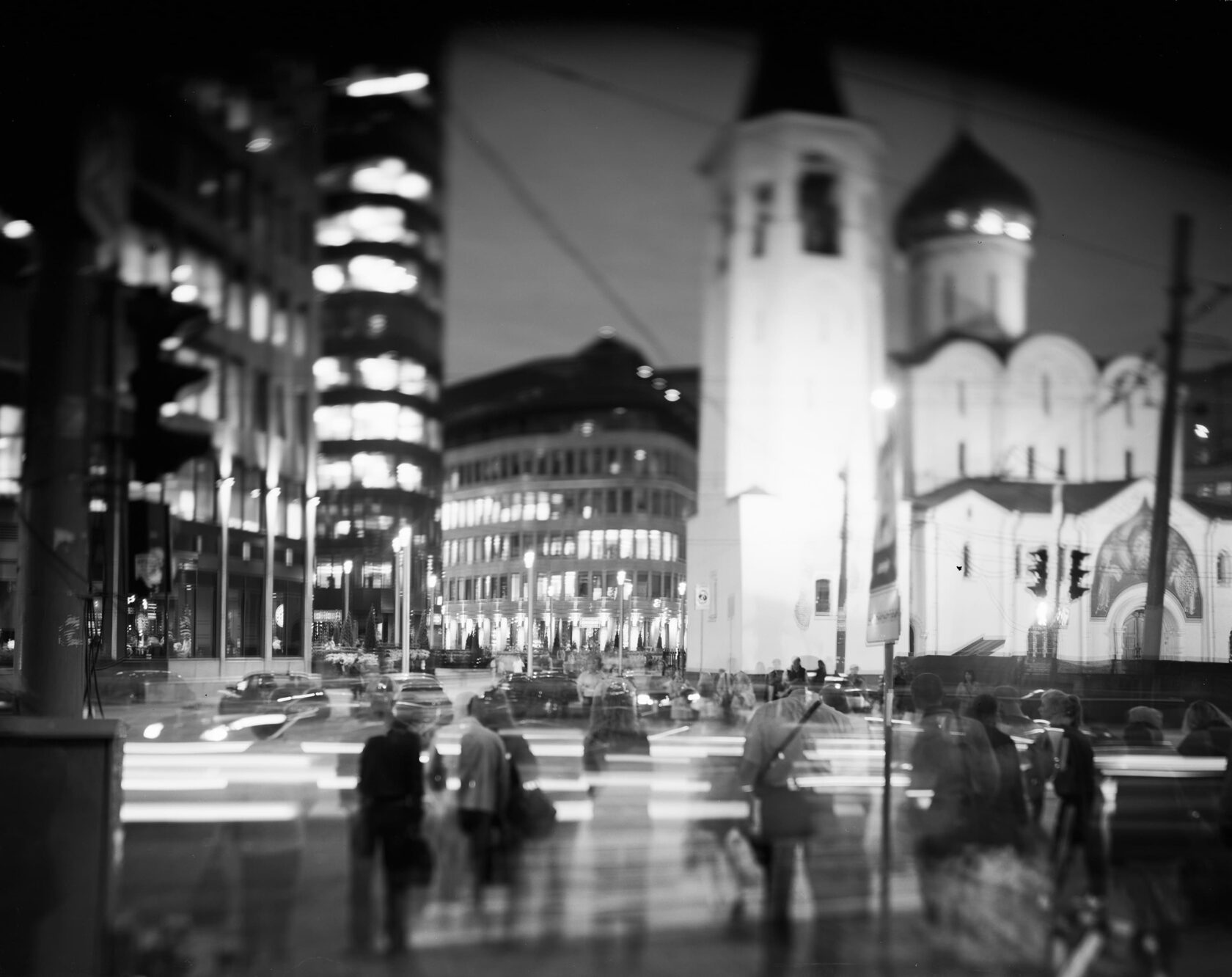
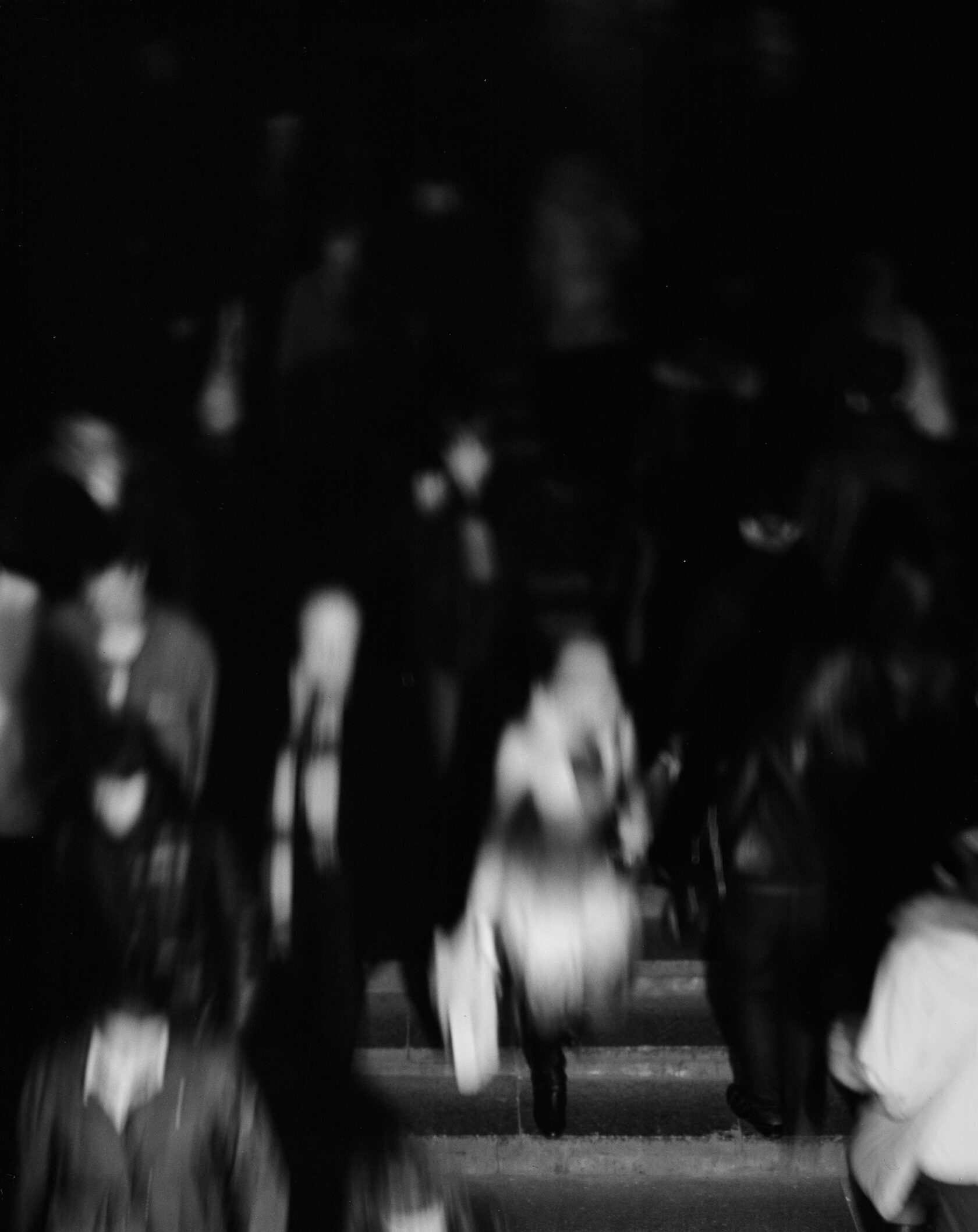
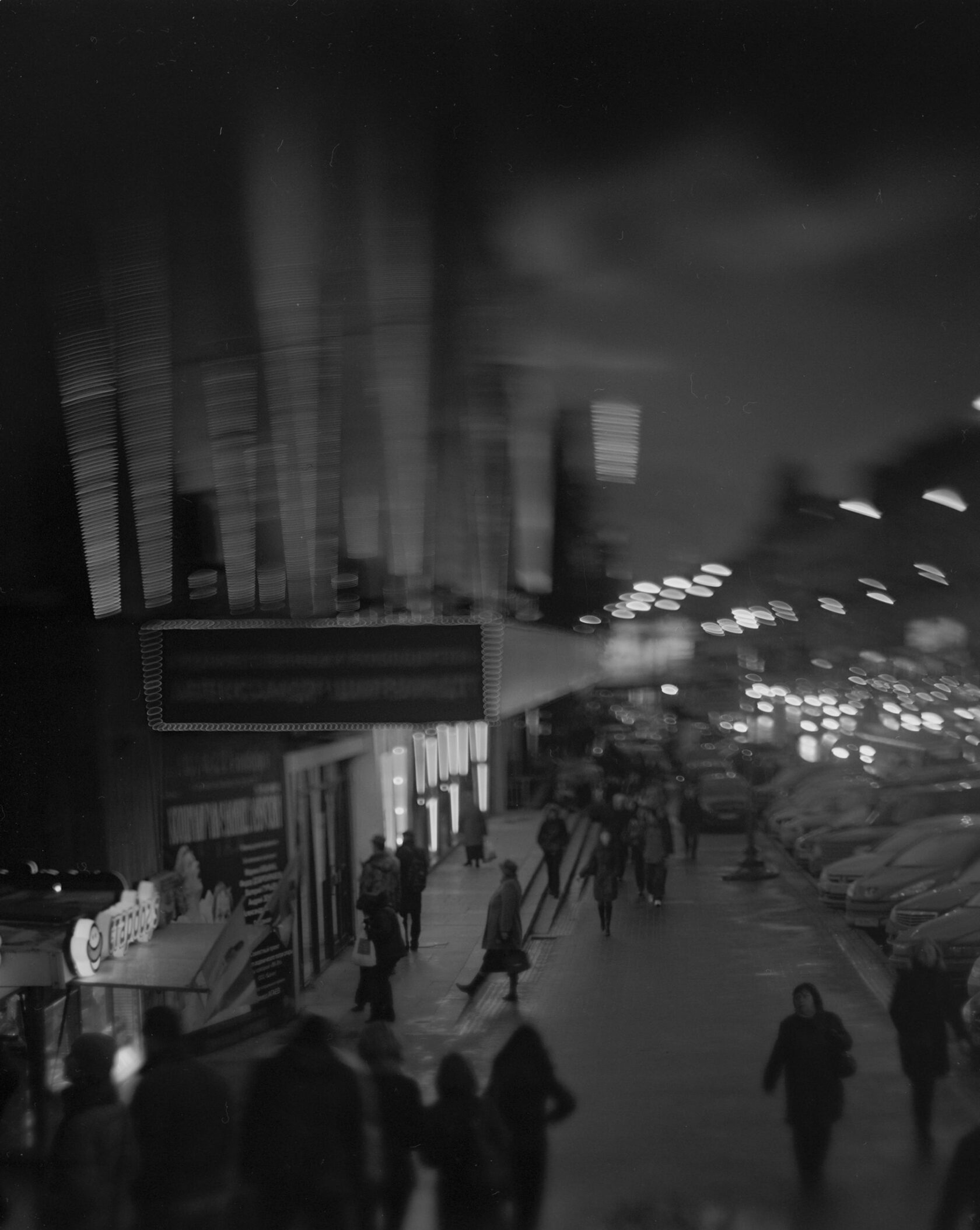
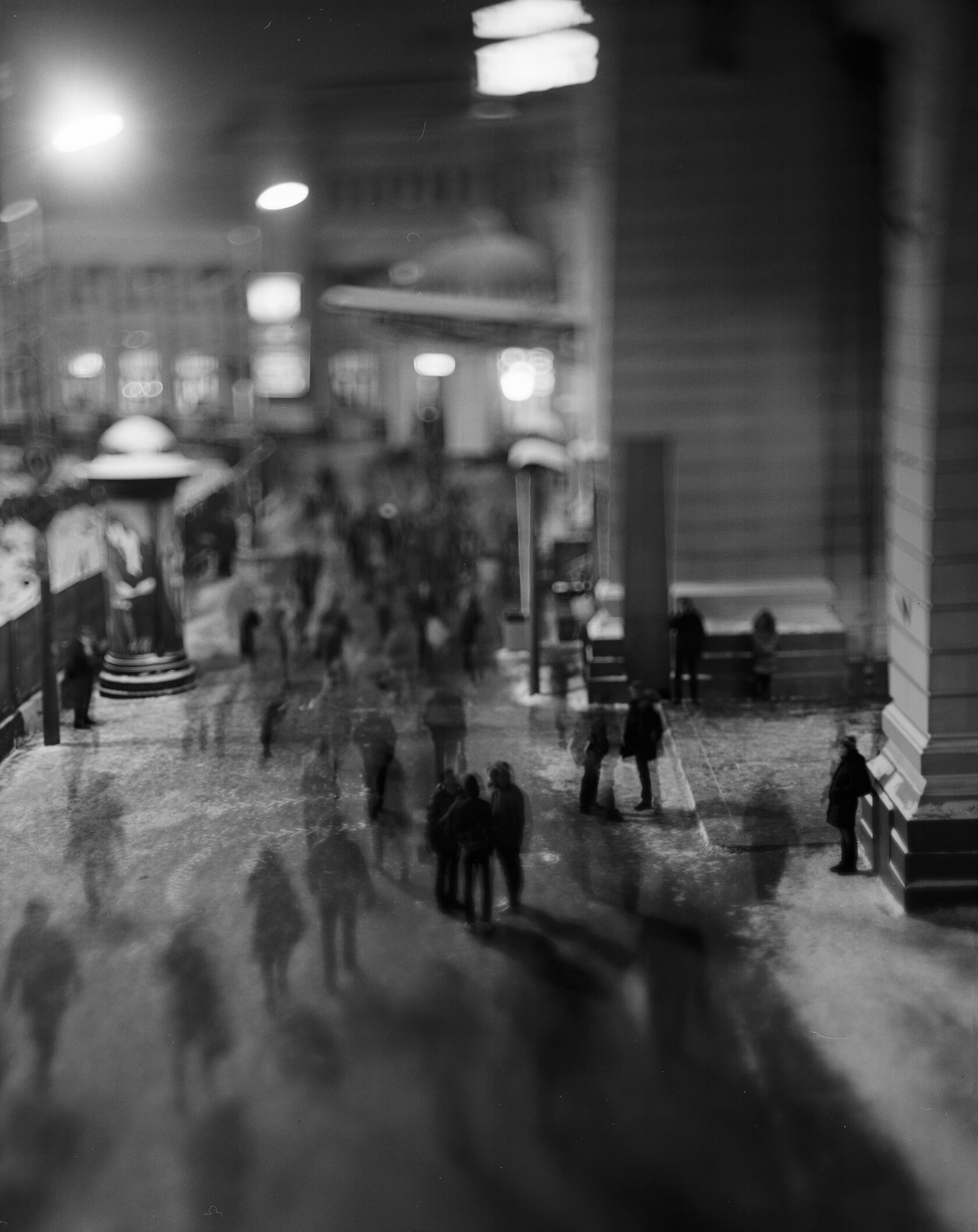
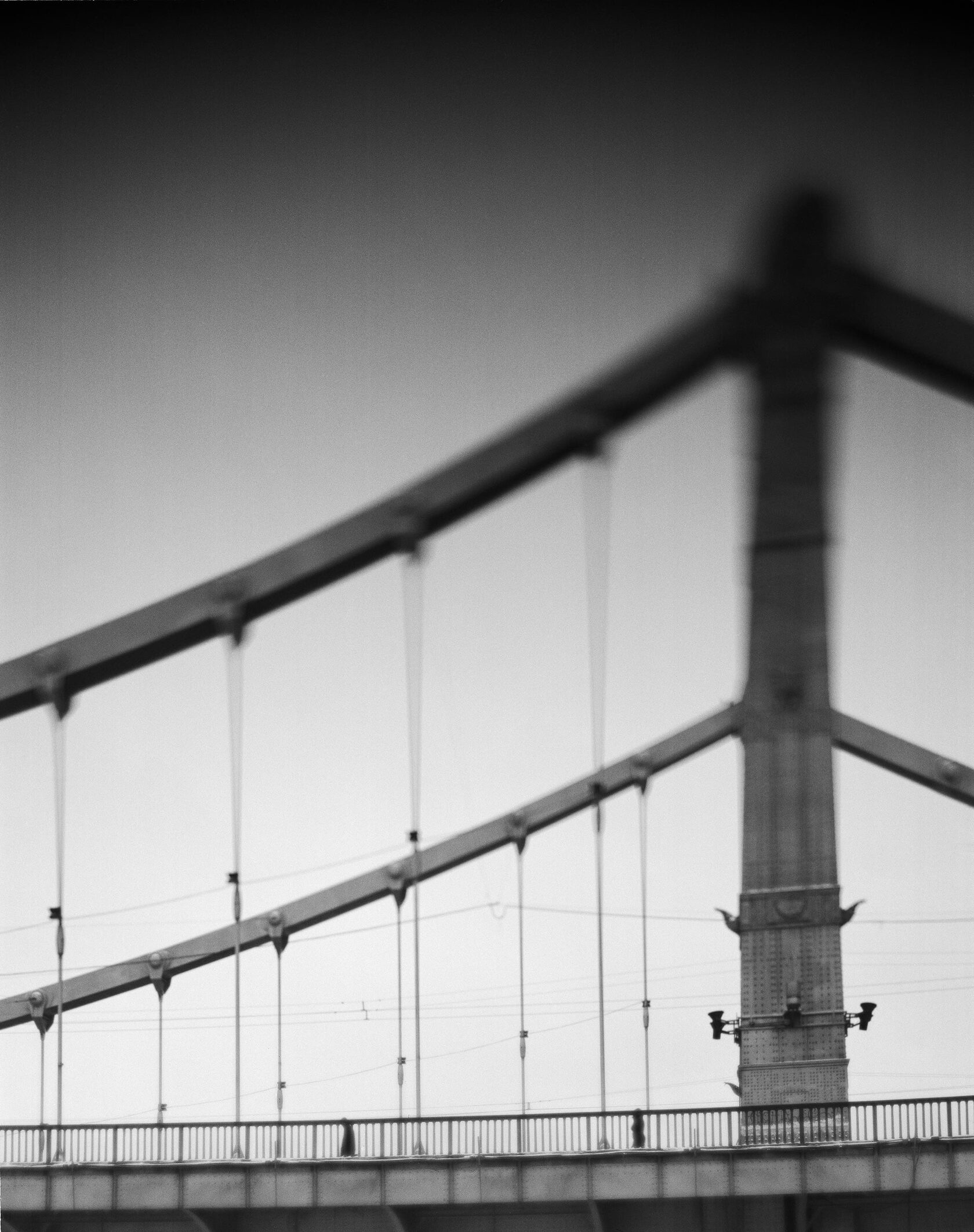
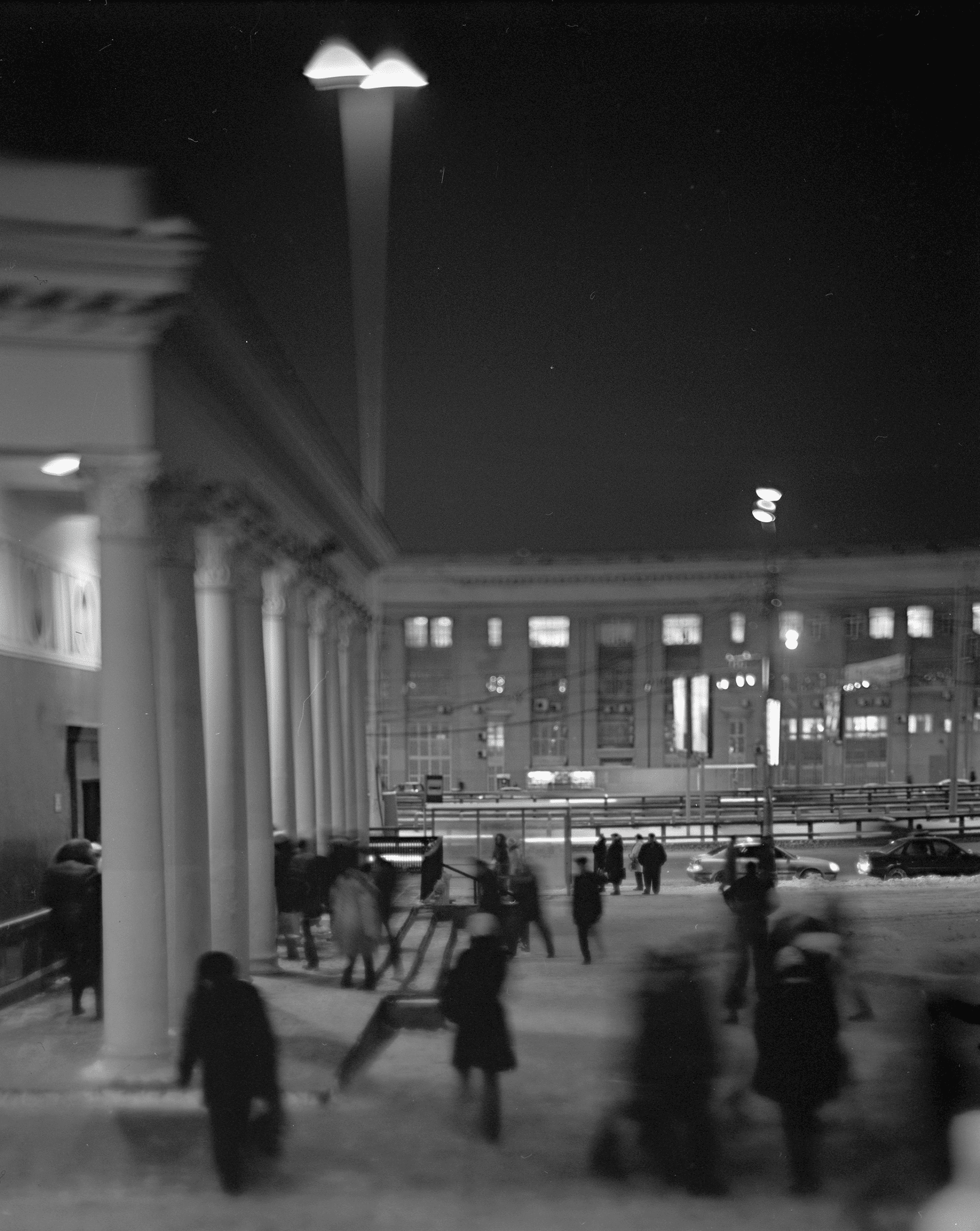
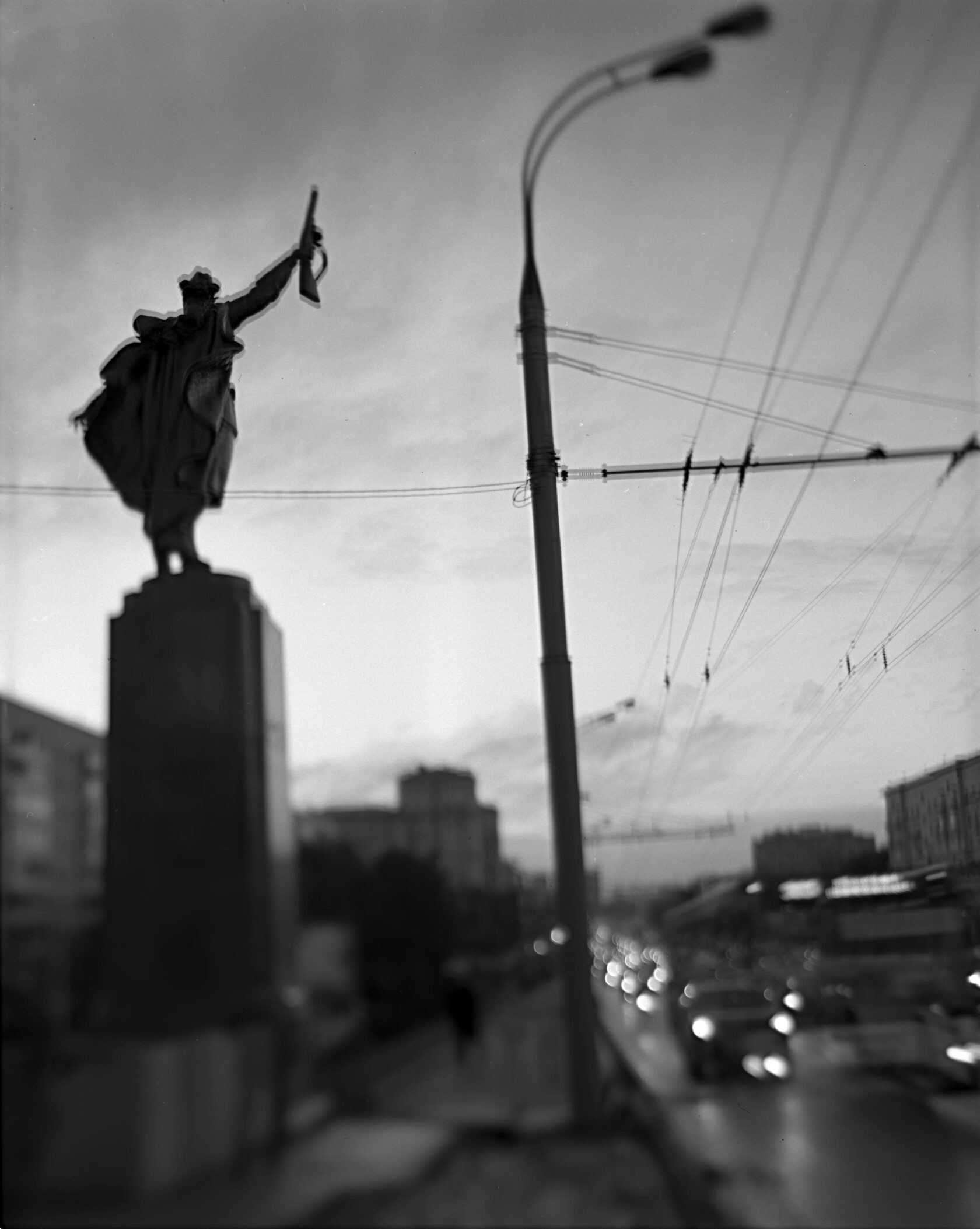
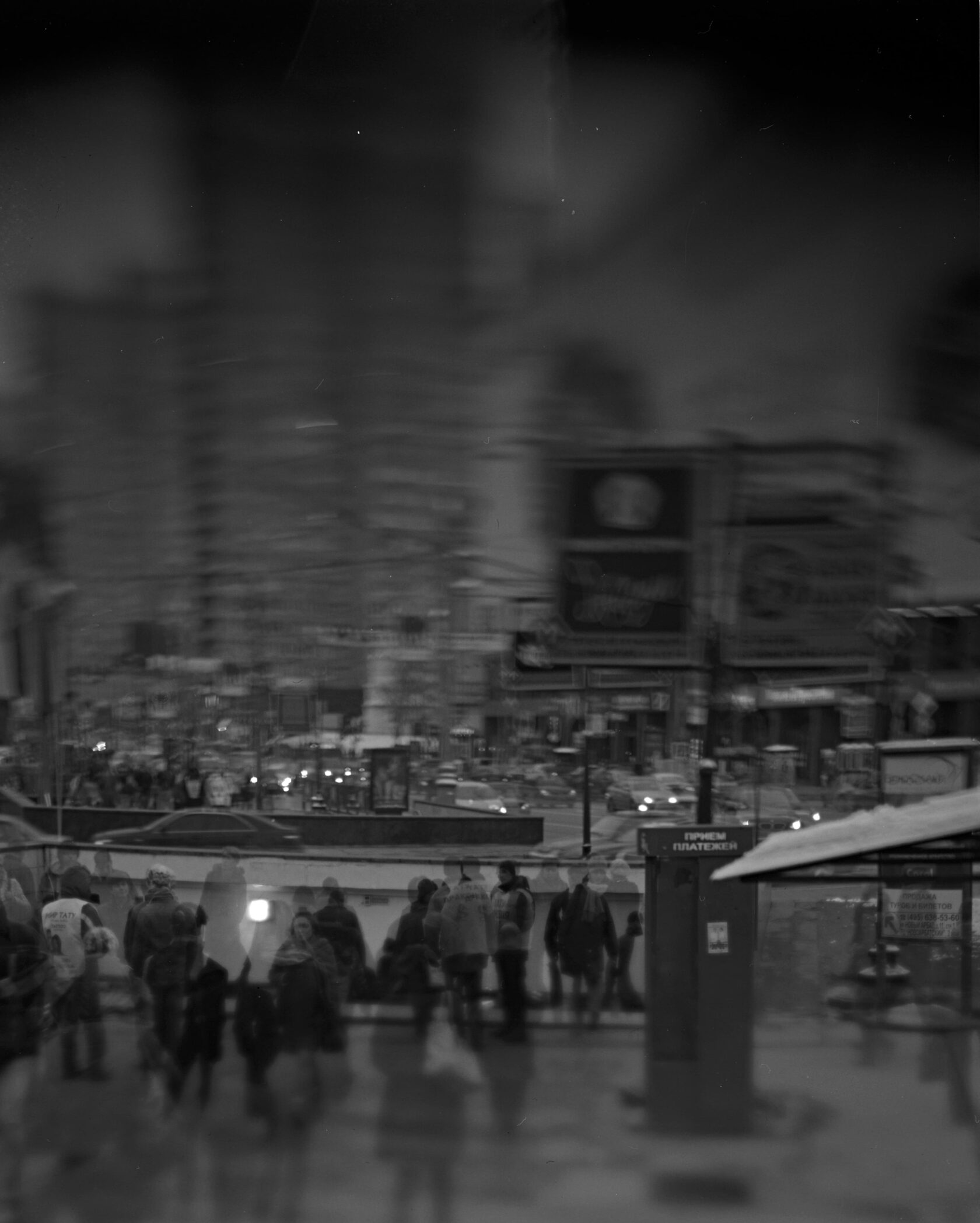
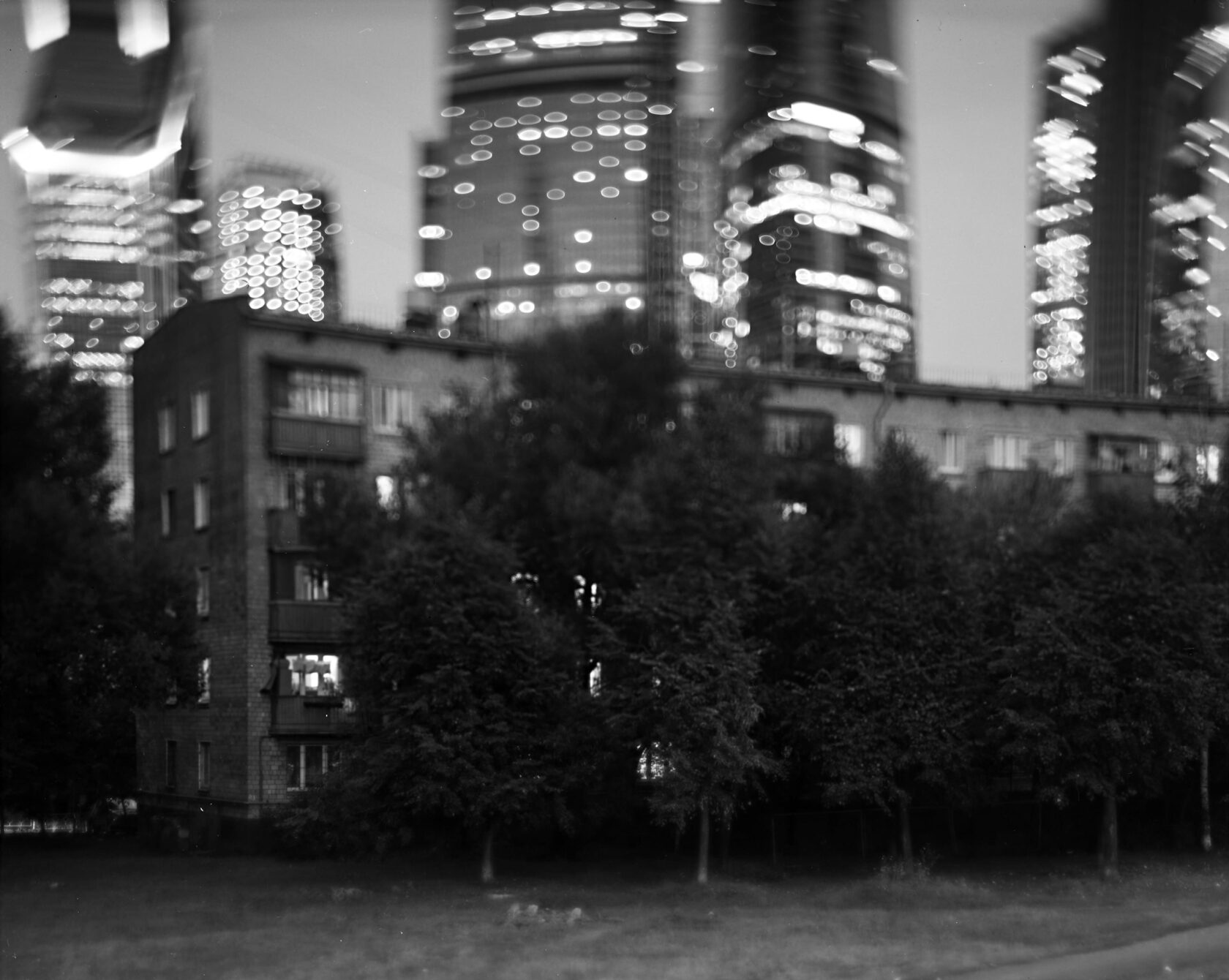
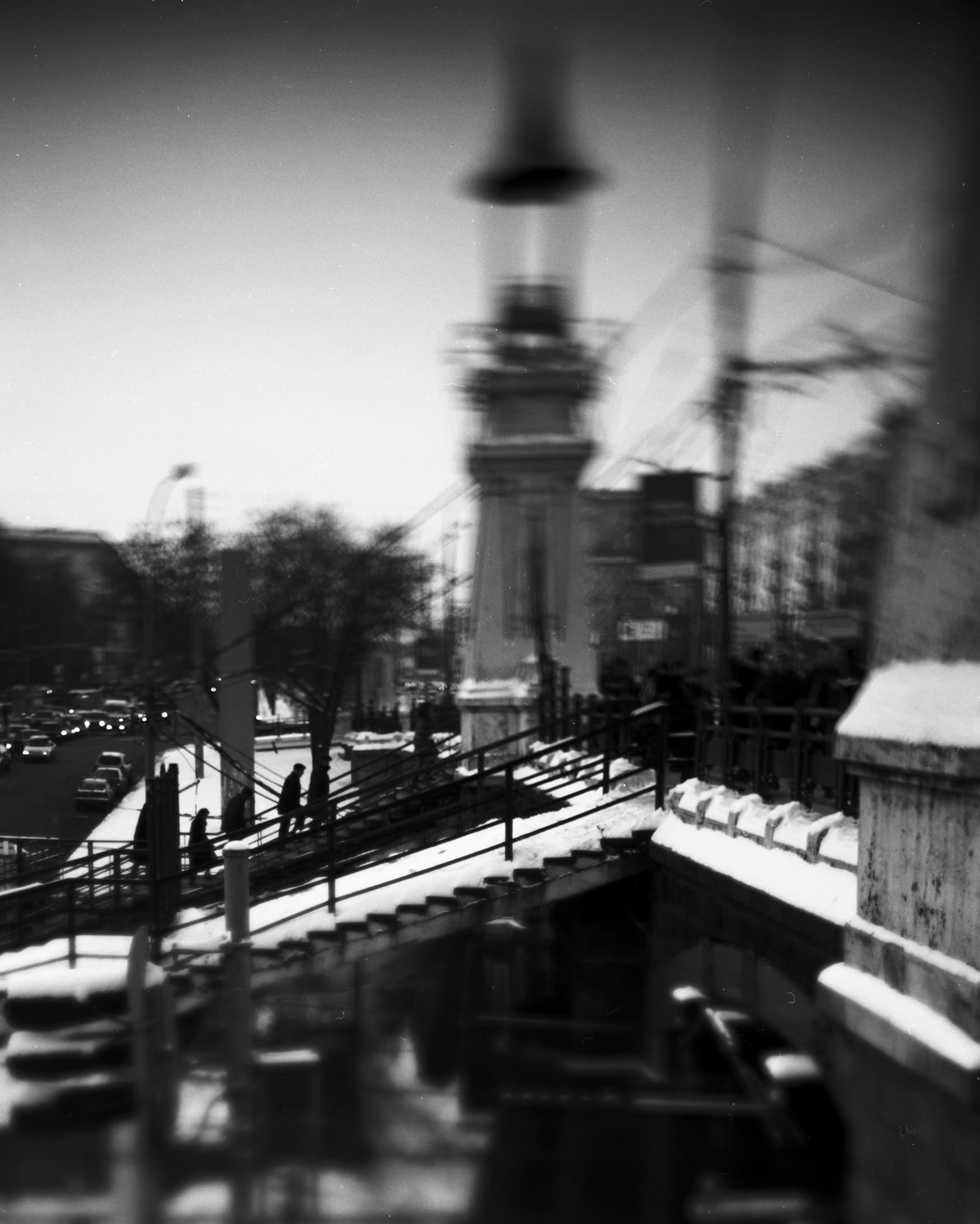
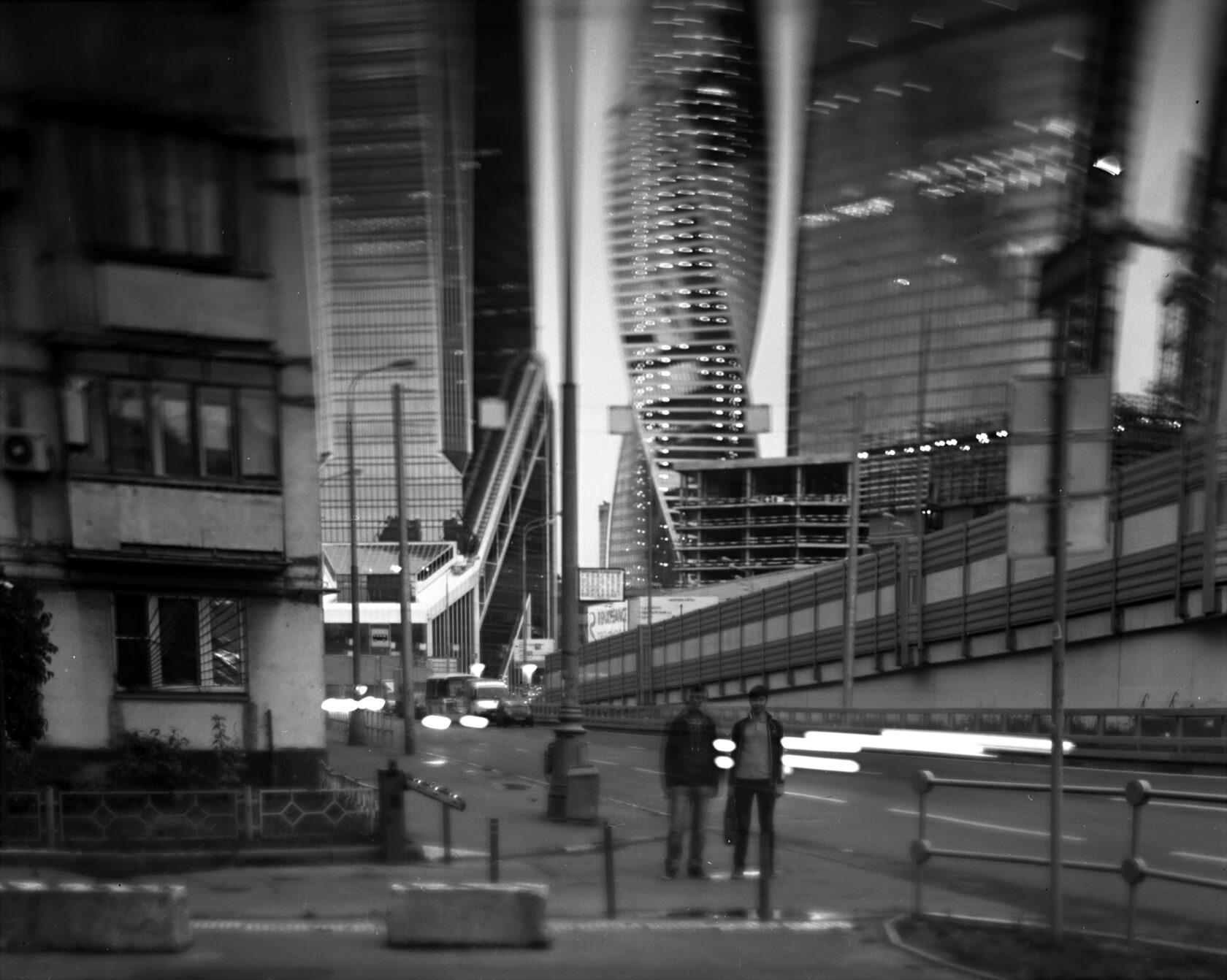
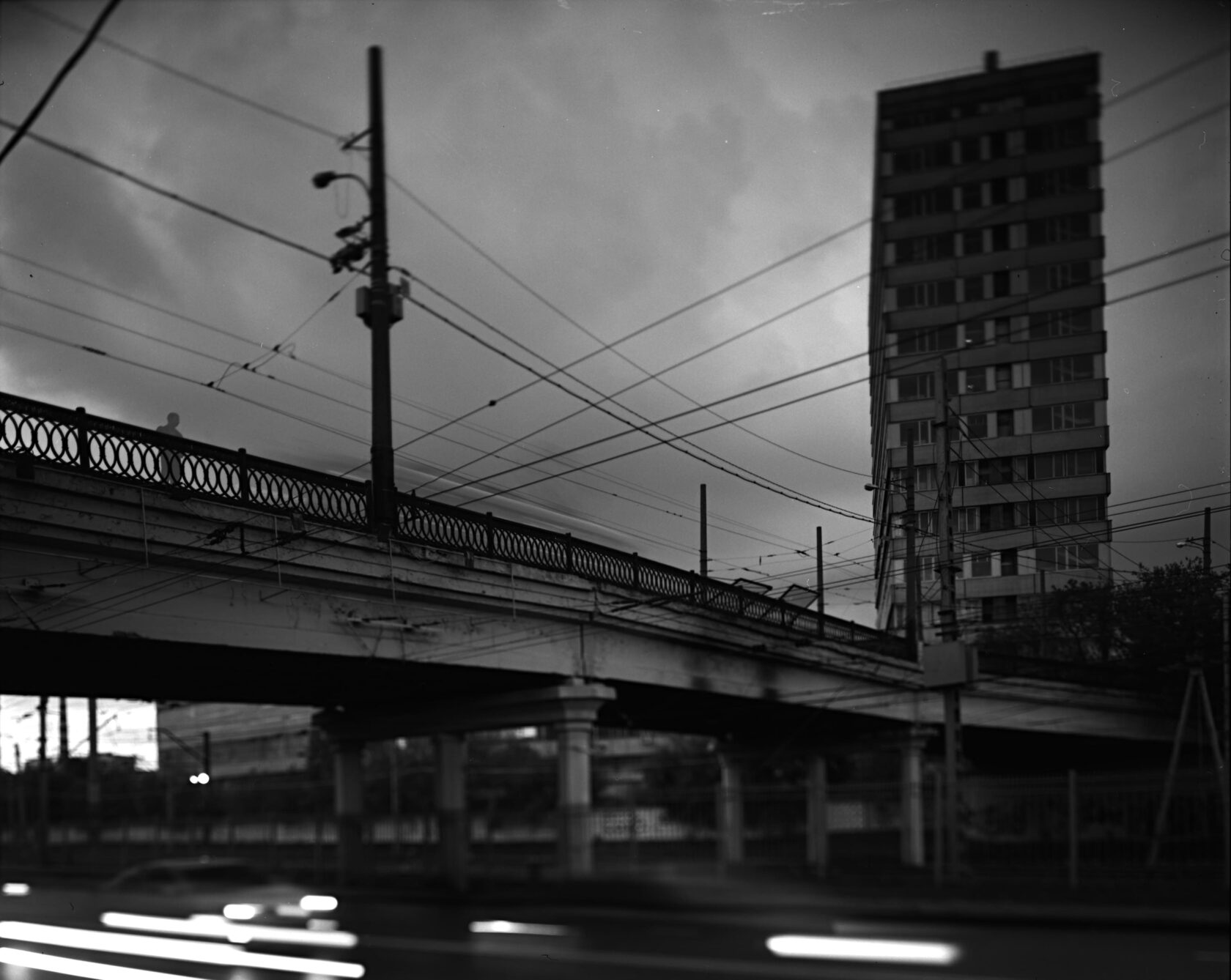
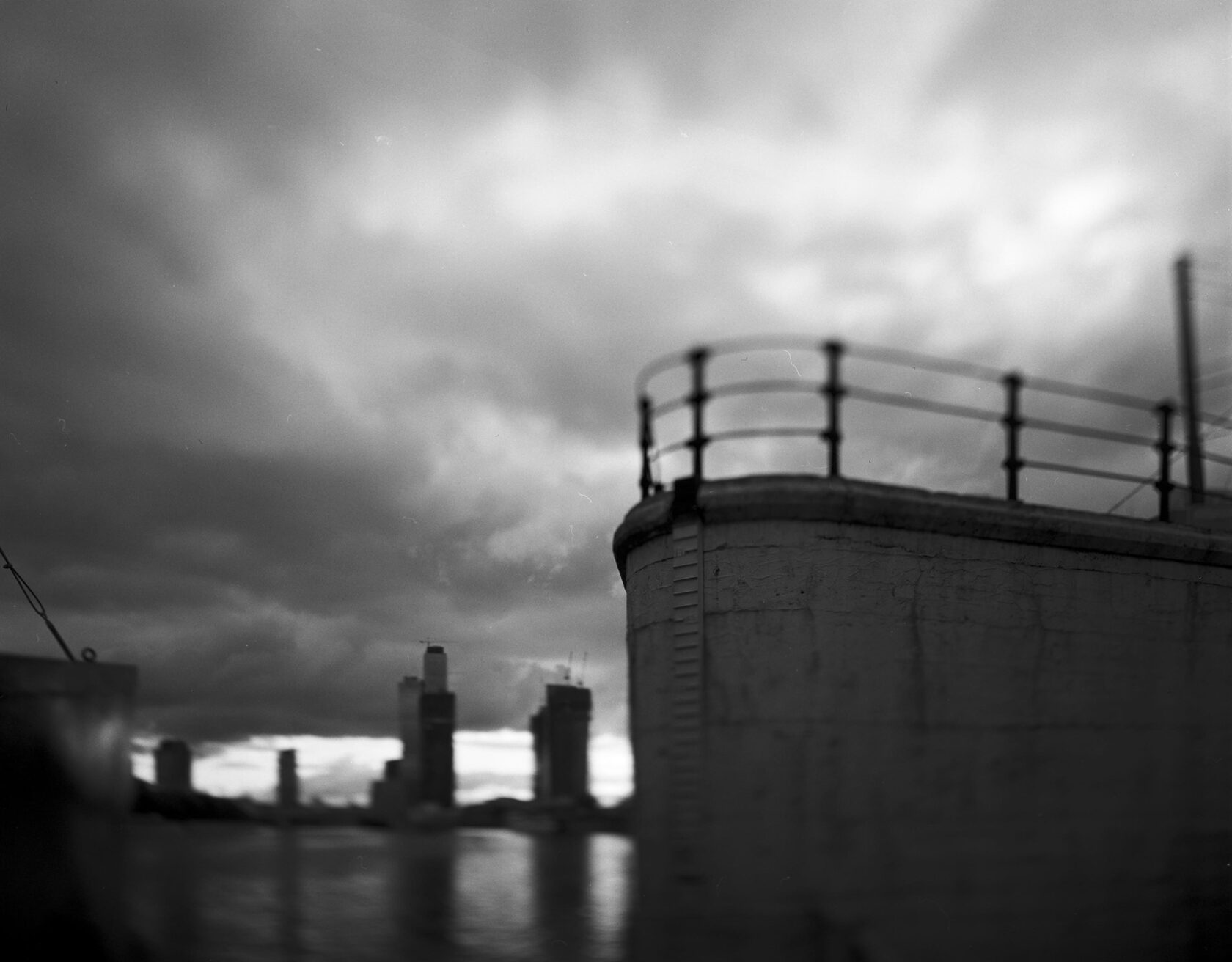
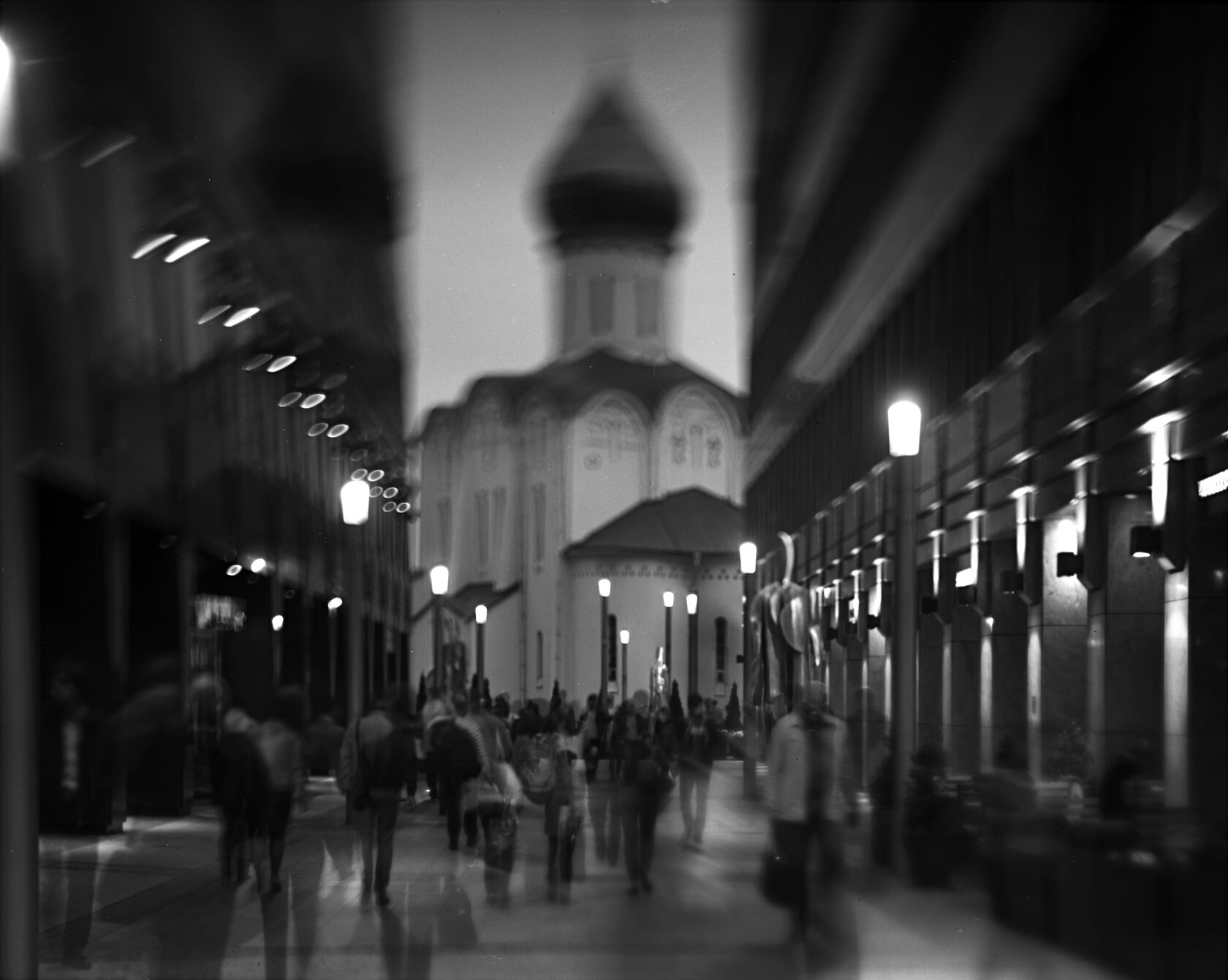
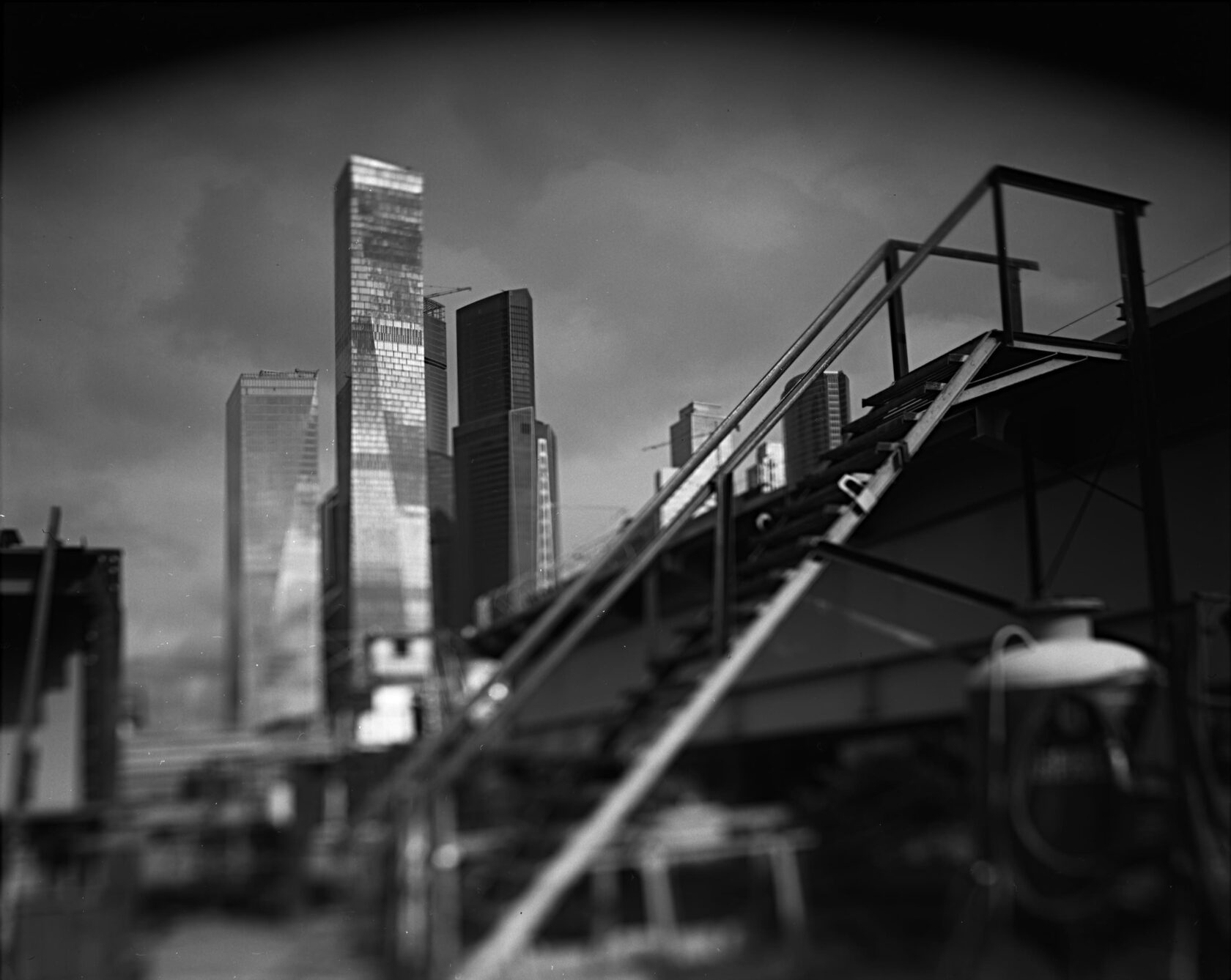
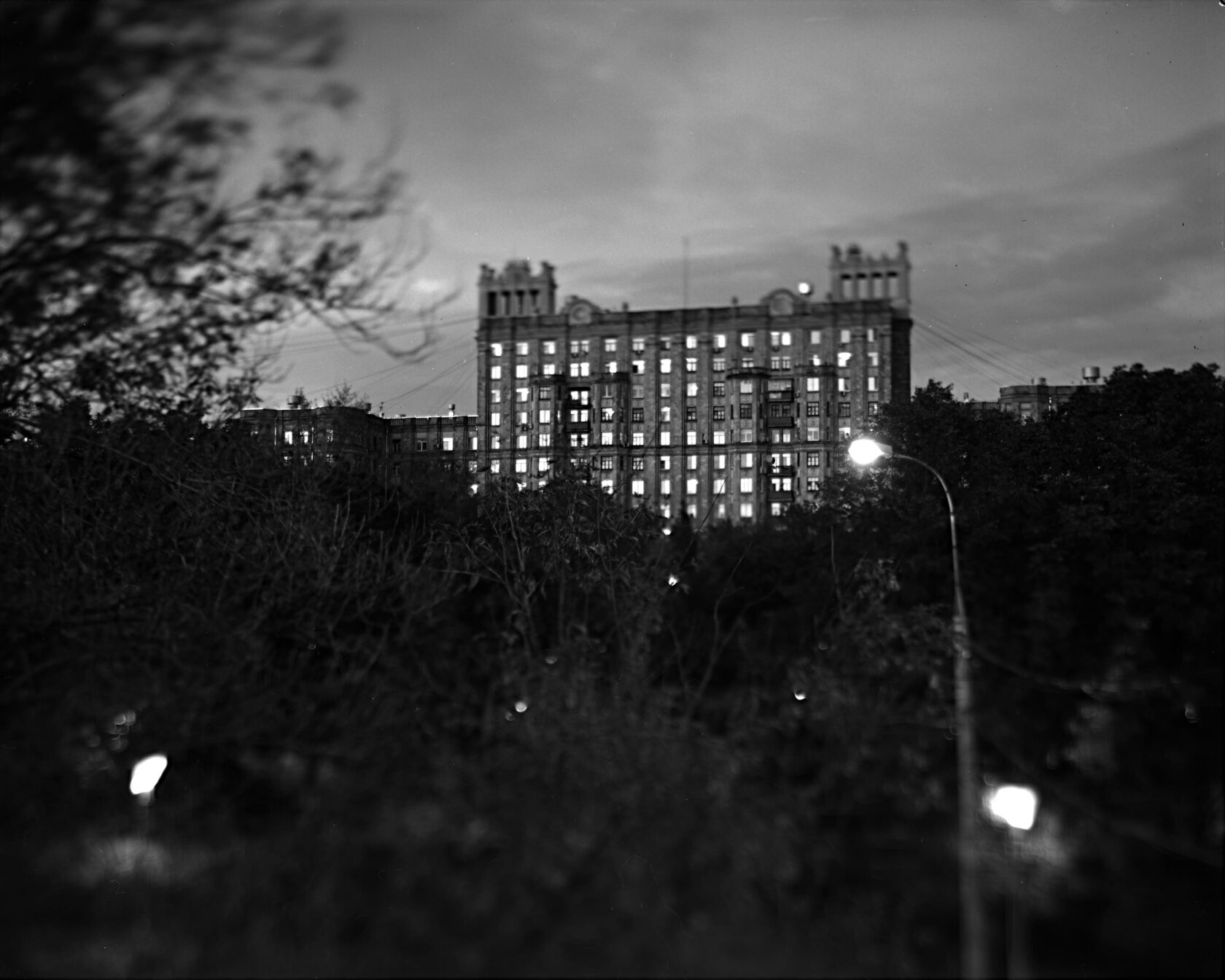
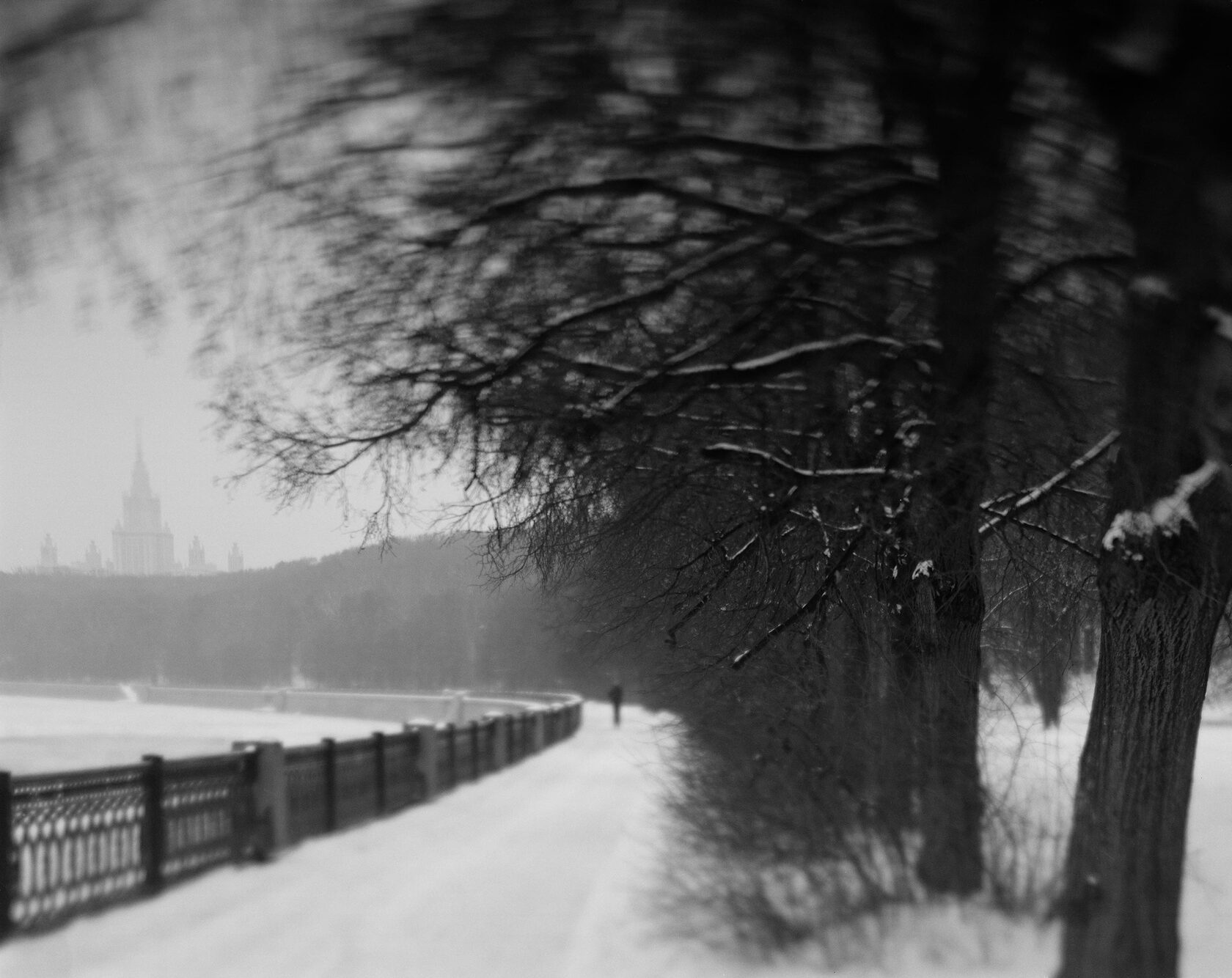
Years later, wandering city streets with a camera, I often photographed fragments of urban life, limiting myself to the frame itself, to composition alone. That continued until one day I looked beneath the dark cloth of my Toyo Field and saw the city upside down on the ground glass. I tilted the front standard, and the world changed: the outlines of the city dissolved, leaving only a single detail in perfect focus while everything else drifted away into a soft haze. Instantly I remembered those watercolor studies and that Estonian summer. Reality melted together like the colors of a cocktail poured into a glass. All that remained was to pick up a straw and drink it.
Cities have always struck me as enormous living masses,
His name was Alexander Maslyanitsyn. From that day on I followed him everywhere like a faithful puppy. I already had paints and brushes at home and had tried drawing before, but somehow it had never felt right. Now I trailed after him, secretly watching every movement, trying to pour onto paper everything I saw around me. He never seemed to mind; he smiled and, from time to time, offered a few quiet words of advice.
What fascinated me most was that something limitless could suddenly fit within the boundaries of a single sheet of paper. The sheet had its own laws. Some things belonged inside it, others did not. Certain parts of a composition felt completely wrong, while others filled me with pure excitement. Without realizing it, I was learning composition and color. That autumn I was admitted directly into the fifth - or perhaps the sixth - year of art school.
Years later, wandering city streets with a camera, I often photographed fragments of urban life, limiting myself to the frame itself, to composition alone. That continued until one day I looked beneath the dark cloth of my Toyo Field and saw the city upside down on the ground glass. I tilted the front standard, and the world changed: the outlines of the city dissolved, leaving only a single detail in perfect focus while everything else drifted away into a soft haze. Instantly I remembered those watercolor studies and that Estonian summer. Reality melted together like the colors of a cocktail poured into a glass. All that remained was to pick up a straw and drink it.
Cities have always struck me as enormous living masses,
something like clay or plasticine, flowing and shifting as a single organism. Streets and buildings merged into one substance beneath a heavy sky, while crowds of people became part of that same living body, endlessly flowing from one place to another. The city felt like a creature, sometimes even a monster.
Every day the metropolis swallowed millions of newcomers while relentlessly grinding down those who already belonged to it. It kept growing, its fresh scales shimmering in the form of newly rising buildings. There was nothing scientific about these thoughts. The city attracted me and repelled me at the same time. I hated it and worshipped it. I wrestled with it the way Hercules wrestled the Hydra.
Using the movements of my camera, I tried to bring urban space to life, following in the footsteps of Dostoevsky, Bulgakov, and Trifonov. I wanted to brand the city with a single photograph, the way Blow-Up had done in 1966. So I wandered, searching for that one image.
I usually began my hunt around four or five in the afternoon and photographed until darkness fell. That was how the project came to be called Twilight. In winter, twilight arrived even earlier, and sometimes it seemed as though it never ended.
Only much later did I discover the concepts of biourbanism and the mythology of the city, but by then they no longer mattered and had no influence on the project.
27 June 2026
K.
Every day the metropolis swallowed millions of newcomers while relentlessly grinding down those who already belonged to it. It kept growing, its fresh scales shimmering in the form of newly rising buildings. There was nothing scientific about these thoughts. The city attracted me and repelled me at the same time. I hated it and worshipped it. I wrestled with it the way Hercules wrestled the Hydra.
Using the movements of my camera, I tried to bring urban space to life, following in the footsteps of Dostoevsky, Bulgakov, and Trifonov. I wanted to brand the city with a single photograph, the way Blow-Up had done in 1966. So I wandered, searching for that one image.
I usually began my hunt around four or five in the afternoon and photographed until darkness fell. That was how the project came to be called Twilight. In winter, twilight arrived even earlier, and sometimes it seemed as though it never ended.
Only much later did I discover the concepts of biourbanism and the mythology of the city, but by then they no longer mattered and had no influence on the project.
27 June 2026
K.
THE CITY.
People are selfish by nature. I am just as selfish as everyone else, perhaps even more so.
Ever since I was a child, I loved walking with no destination in mind, simply wandering wherever my feet would take me. That was when dreaming came easiest. There is something about the steady rhythm of walking that allows your thoughts to drift effortlessly into distant places, into beautiful impossibilities and imagined worlds. Most of the time I was so absorbed in myself that I barely noticed what surrounded me, and yet certain images, small slides of the outside world, left their mark on my memory. Even then I was acutely aware of beauty.
One day I was crossing a field. I must have been twelve or thirteen. It was in Estonia, where my grandparents spent their summers. The countryside rolled gently from open fields into forests and groves, dotted with lonely farmhouses, when suddenly I noticed a man standing in the middle of the field with an easel. Completely absorbed in his work, he moved a small brush across a sheet of watercolor paper. Quietly I came up behind him and looked over his shoulder.
Read more
People are selfish by nature. I am just as selfish as everyone else, perhaps even more so.
Ever since I was a child, I loved walking with no destination in mind, simply wandering wherever my feet would take me. That was when dreaming came easiest. There is something about the steady rhythm of walking that allows your thoughts to drift effortlessly into distant places, into beautiful impossibilities and imagined worlds. Most of the time I was so absorbed in myself that I barely noticed what surrounded me, and yet certain images, small slides of the outside world, left their mark on my memory. Even then I was acutely aware of beauty.
One day I was crossing a field. I must have been twelve or thirteen. It was in Estonia, where my grandparents spent their summers. The countryside rolled gently from open fields into forests and groves, dotted with lonely farmhouses, when suddenly I noticed a man standing in the middle of the field with an easel. Completely absorbed in his work, he moved a small brush across a sheet of watercolor paper. Quietly I came up behind him and looked over his shoulder.
Read more
Contacts
*Instagram is owned by Meta, an organization recognized as extremist and banned in the Russian Federation
*Instagram is owned by Meta, an organization recognized as extremist and banned in the Russian Federation
©2026.